
Forty-three years after The Jam’s working-class protest hit topped the charts, the malice remains—and the song has lost its rage
written by : Jan Vranken
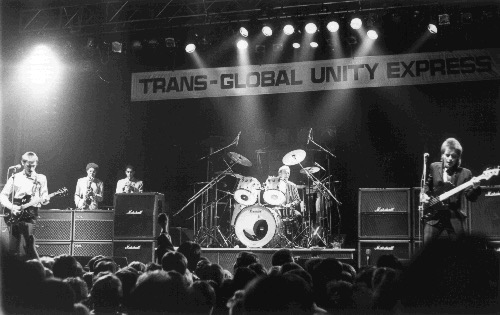
The encore should have been transcendent. It must be a decade ago now—maybe fifteen years, time blurs—but I still remember the disappointment as vividly as if it happened last week. E-Werk in Cologne, a converted power station turned concert hall, had the perfect acoustics for it. My friend and I had waited through an entire Paul Weller set for this moment—the moment when the opening chords of “A Town Called Malice” would punch through the air like they did in 1982, when the song went straight to number one and gave voice to millions trapped in Thatcher’s Britain.
But when it came, something was wrong. The Motown-inspired bass line was there, the stomping beat intact, but the fury had evaporated. Weller went through the motions with a professional’s precision, but the song that once felt like a Molotov cocktail thrown at the British establishment now sounded like a wedding band covering its own material. The crowd dutifully sang along, but we were performing a ritual, not living a moment. I’ve been to hundreds of concerts over four decades of music journalism, seen thousands of songs performed live, but that rendition of “A Town Called Malice” remains the most uninspired live performance I’ve ever witnessed—and it has haunted me precisely because it shouldn’t have been.
Walking out into the cold Cologne night, I couldn’t shake a troubling question: Had the song lost its teeth, or had we simply stopped listening to what it was trying to tell us?
The answer, it turns out, is more disturbing. The song hasn’t lost anything. We have. Because forty-three years after “A Town Called Malice” became The Jam’s third UK number-one single, the malice it described hasn’t just endured—it has calcified into Britain’s social DNA.
February 1982: When Rage Had a Motown Beat
On January 29, 1982, The Jam released what would become their most enduring anthem as a double A-side with “Precious.” By February 9, it had entered the UK Singles Chart at number one, where it would remain for three weeks, ultimately becoming the tenth best-selling single of the year. The title was a play on Nevil Shute’s novel “A Town Like Alice,” though Paul Weller would later admit he hadn’t actually read the book. The inspiration was closer to home—and far more painful.
“It could have been written about any suburban town, but it was in fact written about my hometown of Woking,” Weller explained in a 2012 interview. That hometown was a microcosm of Britain’s industrial collapse. By January 1982, unemployment had surged past three million for the first time since the 1930s—a number that would continue climbing to 3.5 million by 1985. Between 1980 and 1983, the steel industry alone hemorrhaged nearly 95,000 jobs, plummeting from 166,000 workers to just 71,000. Manufacturing communities that had sustained families for generations were being systematically dismantled by Margaret Thatcher’s monetarist policies.
Musically, “A Town Called Malice” was a deliberate subversion. Weller was obsessed with creating what he called “a 1980s brand of soul,” and bassist Bruce Foxton lifted the nimble bass line from The Supremes’ 1966 hit “You Can’t Hurry Love.” The result was intoxicating: an upbeat, hand-clapping groove that could fill a dance floor, wrapped around lyrics describing systematic economic devastation. The Irish Independent would later describe it as a “class-war tirade set to a post-punk northern soul groove,” and that tension between the infectious beat and the bitter message was precisely what made it so powerful.
Six months earlier, The Specials had released “Ghost Town,” another number-one hit chronicling Britain’s urban decay. But where Jerry Dammers’ song was haunting and elegiac, Weller’s was furious and defiant. The video featured cue-cards with slogans like “If we ain’t getting through to you, you obviously ain’t listening.” Young people were listening—because they were living it. The queue at the dole office wasn’t an abstraction; it was Monday morning.
The Falklands Paradox: Two Britains, One Year
Here’s where 1982 reveals its schizophrenic character. While “A Town Called Malice” was still riding high in the charts, describing the slow death of industrial Britain, another story was beginning—one that would save Thatcher’s political career and doom any chance of reversing course on the policies Weller was protesting.
On April 2, 1982, barely two months after The Jam’s single hit number one, Argentine forces invaded the Falkland Islands. What followed was a 74-day war that killed 907 people and ended with Argentine surrender on June 14. For Thatcher, facing dismal approval ratings due to the economic crisis, the victory was providential. The “Falklands Factor,” combined with the resumption of economic growth by late 1982, transformed her from a potentially one-term prime minister into the “Iron Lady” who would dominate British politics for another eight years.
The 1983 general election was a landslide: Conservatives took 42.4% of the vote against Labour’s 27.6%. The newly formed SDP-Liberal Alliance managed 25.4% but won only a handful of seats. Thatcher had her mandate, and with it, the political capital to accelerate the very policies that had inspired Weller’s anger.
The paradox was brutal in its clarity. In the same year that Britain’s working-class youth made a song about industrial devastation a massive hit, the country re-elected the architect of that devastation with overwhelming support. For some Britons, 1982 meant the dole queue and the closure of the local factory. For others, it meant the restoration of national pride and a return to imperial glory. Woking got nothing. Port Stanley got a new airport and a military garrison.
Thatcher understood this duality. In a 1982 speech, she promised that the National Health Service was “safe in our hands”—a rare concession to popular opinion—while simultaneously intensifying her assault on the unions and accelerating privatization. She had learned that you could eviscerate the working class economically while still winning their votes with nationalism and nostalgia.
Paul Weller, watching this unfold, became increasingly frustrated with The Jam’s three-piece format. “There are only so many variations on the guitar/drums format,” he told The Guardian years later. By December 1982, he announced the band’s breakup, seeking the freedom to explore the brass sections and female vocals that would define his next project, The Style Council. The Jam played their final show on December 11, 1982, at Brighton Centre. “A Town Called Malice” had been both a peak and a requiem.
The Long Echo: From Woking to Billy Elliot
Great protest songs don’t age gracefully—they either become artifacts of a resolved crisis or they haunt us with their continued relevance. “A Town Called Malice” chose the latter path.
In 2000, director Stephen Daldry chose the song for one of the most emotionally charged scenes in “Billy Elliot,” his film about an 11-year-old boy pursuing ballet during the 1984-85 miners’ strike. In the scene, Billy—frustrated by his family’s rejection of his dreams and trapped by the rigid gender expectations of his mining community—explodes into an angry tap dance through the brick-walled streets of County Durham. The choreography is violent: he kicks walls, screams, literally throws his body against the physical barriers surrounding him. The Jam’s song, nearly two decades old by then, provided the perfect sonic landscape for that claustrophobic fury.
The scene worked because nothing had fundamentally changed. The mining communities of 1984 had been decimated just as thoroughly as Woking’s working-class neighborhoods of 1982. A new generation had inherited the same trap: economic abandonment dressed up as economic freedom. Daldry’s film was nostalgic for the solidarity of the strike while acknowledging its futility. Billy escapes—but only by leaving his community behind. That was the Thatcherite bargain: individual success through collective abandonment.
Weller himself seemed to recognize the song’s staying power. When asked about it in 2012, he reflected: “I think it’s still relevant. I don’t think things have moved on too much since.” He had started performing it again in his solo shows, acknowledging that it had transcended The Jam’s catalog to become what he called “a great folk song.” The audience no longer needed the context explained to them. The opening bars were enough.
But there’s a danger in songs becoming folk anthems. They can become museum pieces, artifacts of historical struggle rather than calls to present action. When Conservative Party leader David Cameron claimed in the 2000s that The Jam’s music “meant a lot” to him, Weller was asked how he would have felt in the early 1980s if he’d known Tories were coming to Jam concerts. “I’d have been really, really surprised,” he replied dryly. “I think I pretty much nailed where I was at to the mast.”
The irony was complete: the party of Thatcher now claimed ownership of the songs protesting Thatcher’s policies. It was the ultimate recuperation—not just of music, but of memory itself.
2024-2025: The Numbers Don’t Lie
If you want to understand why that performance in Cologne felt so hollow—why it has stayed with me as a low-water mark across decades of concert-going—look at what’s happened, or rather hasn’t happened, in the years since 1982.
The Institute for Fiscal Studies, analyzing the most recent data from 2022-23, reports that 14.3 million people in the UK are living in poverty—21% of the population. That breaks down to roughly 2 in every 10 adults and 3 in every 10 children. The Joseph Rowntree Foundation’s 2025 report is even more damning: it notes that poverty rates have barely changed in 20 years, returning to pre-pandemic levels after temporary coronavirus support was withdrawn. More than 1 in 5 people in the UK live in poverty, including 4.3 million children and 8.1 million working-age adults.
But it’s not just the prevalence—it’s the depth. The Social Metrics Commission found that 6 million people, or 4 in 10 of those already in poverty, are in “very deep poverty.” By October 2024, 2.6 million of the poorest households were in arrears on bills or behind on loan payments. Over 4 million households were going without essentials, and 3.2 million cut back on food or went hungry.
The brutal truth is that the inequality explosion of the 1980s was never reversed. As the IFS notes, “any fluctuations are dwarfed by the seismic changes seen during the 1980s.” Britain’s Gini coefficient—a measure of income inequality—jumped from 0.25 in 1979 to 0.34 in 1990, and it has remained around that level ever since, under both Conservative and Labour governments. The child poverty rate, which stood at 28% when Thatcher resigned in 1990, peaked at 30% under her successor John Major. In 2022-23, it stood at 30% again.
Think about that: four decades, eight prime ministers from both major parties, and child poverty remains exactly where Thatcher left it.
The mechanisms have evolved, but the structure persists. Thatcher’s government encouraged people to shift from unemployment benefits to disability benefits to keep the unemployment figures down—a “quick-fix politics of the worst kind,” as then-Chancellor George Osborne would later admit. In 1982, 14% of the social security budget went to disability payments. By 1997, it was 27%. Between 2002 and 2024, the number on disability benefits rose from 3.9 million to 6.9 million. The categories changed, but the abandonment remained constant.
The geographic inequality has intensified. London’s poverty is now heavily driven by housing costs: 46% of those in poverty are poor only after housing costs are factored in, compared to about 1 in 4 in the rest of the UK. Social renters in London pay 50% more than those in the rest of the country; private renters pay over 80% more. In Tower Hamlets, 48% of children are growing up in poverty. In Bangladeshi communities, the rate reaches 63%.
Meanwhile, as the Equality Trust documented in their 2024 analysis, we know exactly what would reduce this inequality: community wealth-building, taxation of the super-rich, democratic ownership, climate action, political reform, and tackling corporate profiteering. These aren’t radical unknowns—they’re well-understood policy interventions. We simply choose not to implement them.
The Honesty of a Bloodless Performance
Back to Cologne, then. To that moment a decade or more ago when the song I’d loved since my youth arrived as a hollow facsimile of itself, so uninspired it became permanently lodged in my memory as the nadir of live performance. I’ve thought about it constantly over the years, and I’m no longer sure it was a failure at all. Maybe it was the most honest performance Paul Weller could give.
Because what would authentic rage sound like now? The people Weller was singing about in 1982 were angry because their livelihoods were being destroyed in real time. They could still remember when things were different, when the steel mills were running, when union membership meant something, when a working-class wage could support a family. They were fighting against change.
Now? The children and grandchildren of those workers have inherited a world where precarity is normal, where zero-hour contracts are standard, where the idea of a job-for-life is as archaic as the feudal system. They’ve been told their entire lives that inequality is natural, that poverty is a personal failure, that there is no alternative. The fight isn’t against change—it’s against permanence.
When Weller performs “A Town Called Malice” today, he’s a 67-year-old millionaire playing to audiences who can afford £50-100 tickets. The Woking of his youth is now a commuter town where the median house price is over £400,000. The malice hasn’t gone anywhere—it’s just been laundered into something respectable, something we’ve agreed not to call by its name.
The song’s chorus—which Weller shouts more than sings—goes: “Struggle after struggle, year after year / The atmosphere’s a fine blend of ice and fear.” In 1982, that was a protest. In 2025, it’s a weather report.
Perhaps that’s why the performance felt so lifeless, why it has haunted me through all these years as the least inspired live moment I’ve witnessed. Not because Weller has lost his talent or passion, but because we’ve collectively lost our capacity to imagine that things could be different. The song was written in anger because anger implies the possibility of change. What we have now is something colder: resignation dressed up as realism.
The Jam broke up at their peak because Weller couldn’t stand repeating himself, couldn’t bear the thought of becoming a parody of his own rebellion. But here we are, forty-three years later, and Britain is repeating itself with metronomic precision. The same patterns of abandonment, the same rhetoric of personal responsibility, the same willingness to sacrifice working-class communities for abstract economic principles.
Weller was right in 2012: things haven’t moved on. But he was being too generous. Things haven’t just stagnated—they’ve calcified. The emergency of 1982 has become the permanent condition of 2025. The town is still called Malice. We’ve just stopped being surprised by it.
That’s what I heard in Cologne all those years ago, in that flat, professional rendition of a once-incendiary song. Not a bad performance, but an honest one. The sound of a man singing a protest song in a world that’s forgotten how to protest. The sound of all of us, really, going through the motions while the walls close in.
The question isn’t why “A Town Called Malice” has lost its rage. The question is why we have.
Note: All statistics and quotes in this article are drawn from documented sources including the Institute for Fiscal Studies, Joseph Rowntree Foundation, Social Metrics Commission, and archived interviews with Paul Weller.
 Writerz Block
Plaats een reactie