Albumreview by Jan Vranken
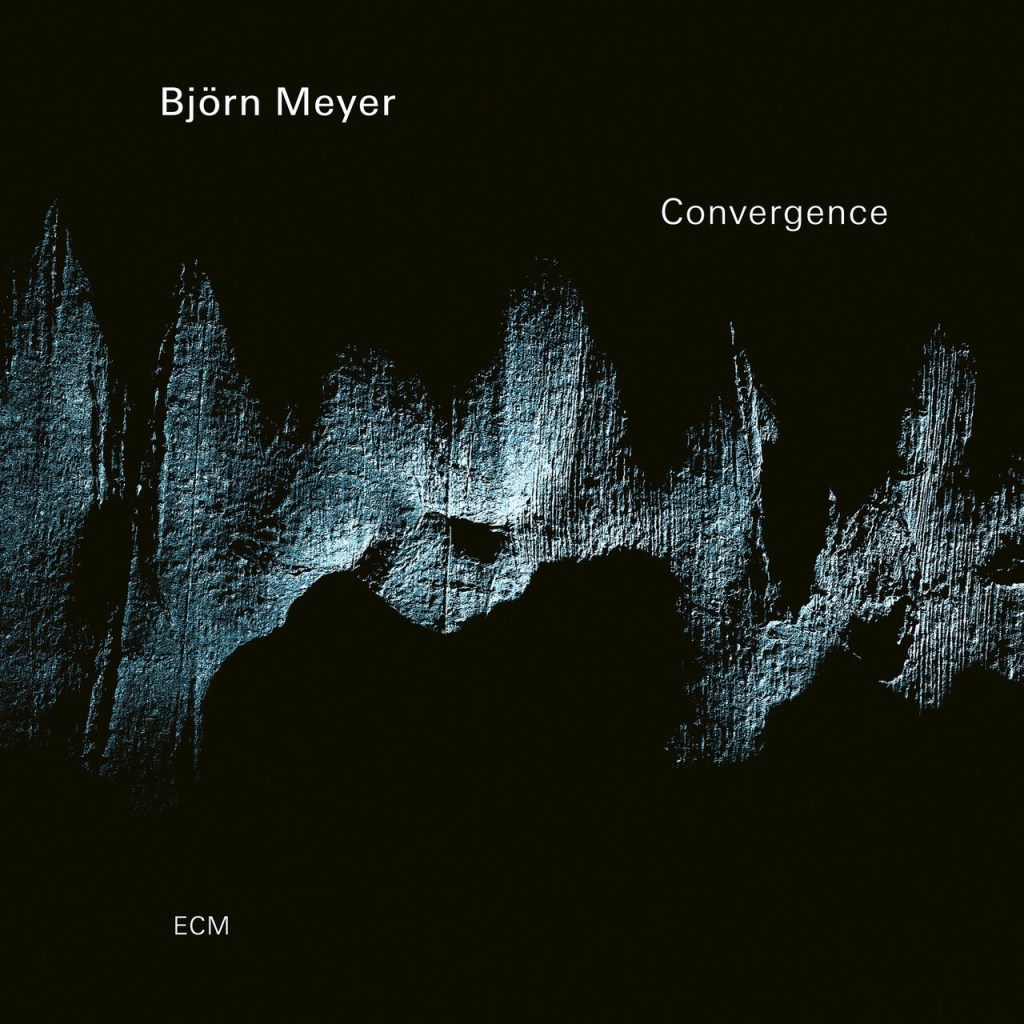
The Swedish bassist transforms his six-string into an orchestra of space and silence
In an era where virtuosity too often masquerades as speed and technical gymnastics, Björn Meyer offers something radically different: restraint as revelation. On Convergence, his second solo outing for the legendary ECM label, the Swedish-born bassist doesn’t just play his six-string electric bass—he allows it to breathe, to haunt, to inhabit the vast acoustic spaces between notes like a ghost searching for form.
Seven years after his critically acclaimed debut Provenance, Meyer has relocated his sonic laboratory from Lugano’s responsive Auditorio Stelio Molo to Munich’s Bavaria Musikstudios, a room steeped in the tradition of film scoring. It’s a fitting choice. These nine compositions feel less like conventional bass performances and more like cinematic soundscapes, each track conjuring vivid mental images through Meyer’s masterful manipulation of texture, space, and time.
The opening title track sets the album’s meditative tone immediately. Rather than announcing himself with the chest-thumping confidence typical of solo bass records, Meyer opts for intimacy over impact, using delays, reverbs, and live effects to create what initially sounds like post-production wizardry but reveals itself, upon closer listening, to be a real-time ballet of technical control and artistic sensitivity. His instrument doesn’t merely support melodies—it becomes a full orchestra unto itself, capable of evoking everything from bird calls to the gentle hum of nature awakening.
‘Gravity’ stands as the album’s most immediately gripping moment, showcasing Meyer’s elegant polymetric plucking that firmly asserts the bass guitar’s physical presence while simultaneously transcending it. Like Jaco Pastorius’ ‘Portrait of Tracy’ stripped of its flamboyance and reimagined through an ambient lens, the track proves that the electric bass can sing with the emotional directness of any lead instrument when placed in hands this skilled and thoughtful.
The experimental heart of Convergence beats strongest in ‘Rewired’ and ‘Magnétique’, where Meyer employs prepared-bass techniques using magnets and metal bars to coax out percussive, metallic textures that nod simultaneously toward John Cage’s avant-garde innovations and the hypnotic rhythms of African mbira music. These moments reveal Meyer’s decade-long tenure with Nik Bärtsch’s Ronin wasn’t merely about keeping time—it was about understanding rhythm as architecture, as the skeletal framework upon which entire sonic universes can be constructed.
‘Hiver’ captures something ineffable—the specific quality of light that arrives on an overcast winter afternoon just before snowfall. It’s here that Meyer’s growth as a melodist becomes most apparent. The yearning, almost vocal quality of his lines demonstrates that technical innovation and emotional depth need not be opposing forces. Meanwhile, ‘Drift’ lives up to its name, its echoing textures pulling the listener into a current of pure sound, transforming the passive act of listening into an active meditation.
Yet Convergence isn’t without its limitations. For all its craft and imagination, the album occasionally struggles to maintain momentum across its full runtime. The very qualities that make individual tracks so captivating—their spaciousness, their refusal to rush toward resolution—can make the overall listening experience feel static rather than transformative. Unlike his work with Tunisian oud master Anouar Brahem, where Meyer’s bass provided crucial counterpoint and dialogue, here he must sustain interest alone, and the conversation sometimes feels one-sided.
The closing track ‘Nesodden’—placed there at the suggestion of legendary ECM producer Manfred Eicher—provides a satisfying resolution, its classically-inclined melody offering a gentle denouement that ties together the album’s disparate threads. It’s a reminder that Meyer understands narrative arc even in music this abstract, that he’s not just creating sonic textures but telling stories with them.
Convergence ultimately succeeds as a profound meditation on what the electric bass can become when freed from its traditional role as rhythmic anchor and harmonic foundation. Meyer doesn’t just challenge conventional notions of his instrument—he obliterates them, revealing the electric bass as a vehicle for ambient exploration, minimalist composition, and pure sonic poetry. While it may not reach the transcendent heights of ECM’s most iconic releases, it firmly establishes Meyer as one of contemporary music’s most fearless and innovative bassists, an artist more concerned with discovering new musical languages than perfecting old ones.
This is music for deep listening, for those willing to surrender to its deliberate pace and allow its carefully constructed atmospheres to seep into consciousness. In Meyer’s hands, the bass guitar becomes not just an instrument but a meditation on space itself—the space between notes, between silence and sound, between what music is and what it might yet become.
(7/10) (ECM Records)
 Writerz Block
Plaats een reactie