Or: why I was crying on the couch while my wife was munching on a bar snack
By Jan Vranken — Writerz Block
It was an ordinary Tuesday evening. Nothing special going on. I had seen the name Cynthia Erivo pop up a few times and had become curious — who was this woman, anyway? Without any expectations, I clicked on a video of a performance at the Kennedy Center. She was singing “Nothing Compares 2 U.”
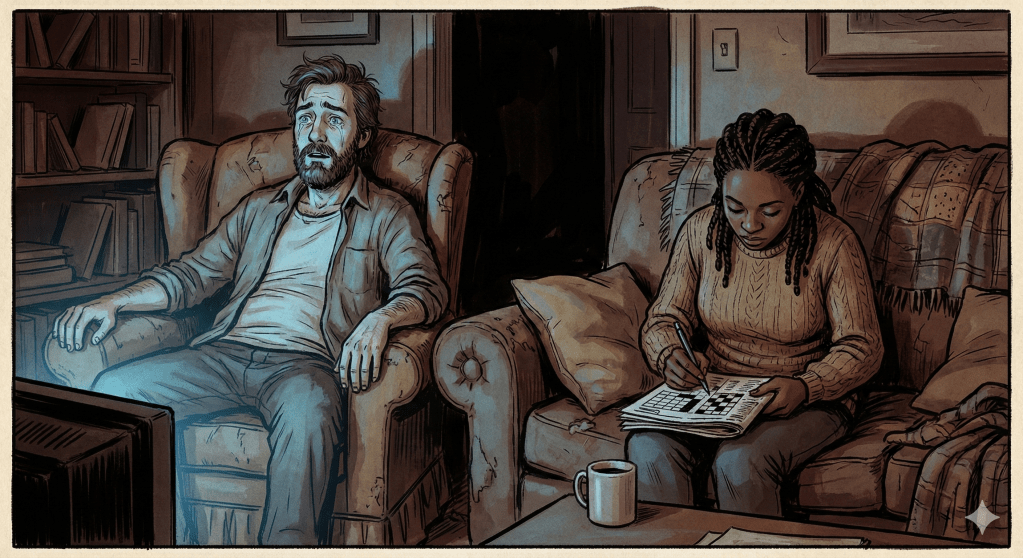
What happened next I still can’t properly explain. Within seconds, her voice had burned its way inside. Not through my ears, but somewhere deeper. As if a door opened that I didn’t know existed. There I sat, a man of 60 with forty years of music journalism behind me, and the tears were streaming down my cheeks.
Next to me on the couch sat Marthe. She popped a bar snack in her mouth without looking up from her crossword puzzle.
“Can you explain to me why I’m sitting here crying tears of joy and beauty?”
She looked up. “Because you’re a softie who loves music.”
And went back to seven down.
—
This wasn’t the first time music had ambushed me.
Pinkpop, May 23, 1988. The first edition at the new location in Landgraaf. I was 22, I was a rocker for God’s sake, and I stood there among 36,000 people. The sun had been blazing mercilessly all day, but toward evening, black clouds gathered on the horizon.

And then she took the stage. Sinéad O’Connor. Shaved head, knee-length shorts, a guitar. Nothing else. No band, no backing vocals, no safety net. Just that strange little girl, alone, facing a sea of festival-goers who had already seen Herman Brood, The Pogues, and the Red Hot Chili Peppers that day.
She launched into “Troy.”
I didn’t know what hit me. This wasn’t supposed to happen. I was a rocker. I wasn’t here to be softened up by an Irish girl who looked like she had just blown in from another planet. But her voice — that raw, furious, vulnerable voice — grabbed me by the throat and wouldn’t let go.
Thirty-seven years later, on a Tuesday evening on my couch in Stein, it happened again.
—
“Nothing Compares 2 U.” A song inseparably linked to Sinéad O’Connor, but one she didn’t write. It was Prince who composed it in 1984 for his side project The Family. Nobody cared. It wasn’t until 1990, when Sinéad recorded it, that it became a worldwide hit — that one song with that one music video where her shaved head fills the frame and real tears roll down her cheeks.
Prince died in 2016. Sinéad in July 2023.
And now there stands Cynthia Erivo — a British actress and singer I barely knew — on the stage of the Kennedy Center. She doesn’t carry the song as a cover, but as a legacy. She doesn’t sing it after Sinéad, she sings it before her, with her, through her. Every note carries the weight of everything that song has come to bear.
How can a rendition you don’t know, by someone you don’t know, reach so deep inside? How does a voice find its way to a place within you where you yourself don’t have the key?
—
Science has a thing or two to say about this, of course. Researchers have discovered that nearly ninety percent of people have cried while listening to music at some point. So we’re not alone, we softies.
They distinguish between two types of musical tears: tears of sadness and tears of awe. The latter category — being overwhelmed by pure beauty — occurs in about a third of criers. These are mainly people who score high on what psychologists call “openness to experience.” People who are curious, who push boundaries, who speak six languages and have been writing about music for forty years, for example. But I digress.
Professor Eckart Altenmüller, a neurologist at the Hochschule für Musik und Theater in Hannover, spent years trying to find a universal formula for musical chills. He dreamed of traveling with the ultimate goosebump-inducing music to remote villages in North Cameroon and making the local population collectively shiver with emotion. It didn’t work. His conclusion after endless brain scans: “Music is strongly biographically colored.” There is no recipe. It remains personal, unpredictable, elusive.
I think he’s right. It explains why people in Africa barely know the Beatles but everyone knows Michael Jackson. MTV was available all over the world, including Africa. People shared their lives with Michael Jackson. They didn’t do that with the Beatles — especially not in Africa, Asia, and the Middle East, places where Michael actually went.
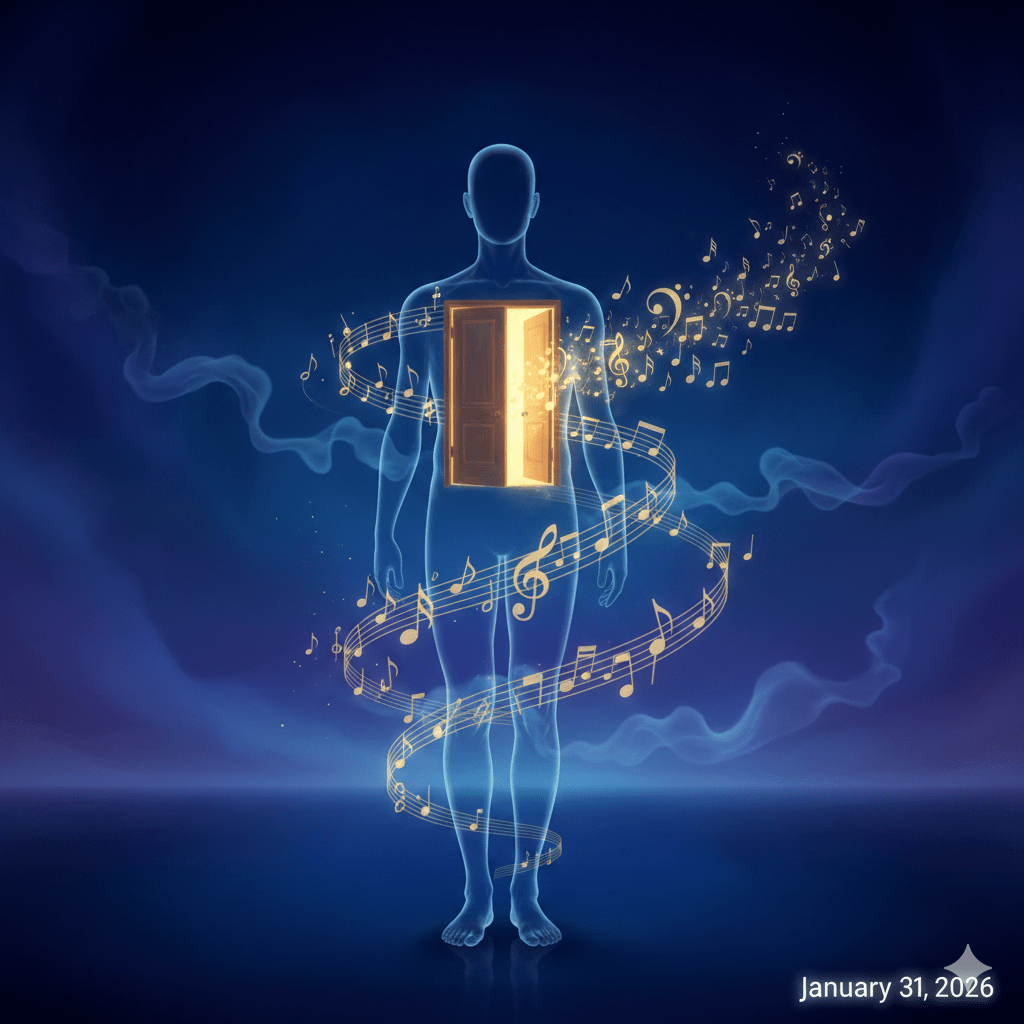
And maybe it also explains why Cynthia Erivo’s version of “Nothing Compares 2 U” touched me so deeply. Sinéad made such an enormous impression on me when I was young. Maybe that’s why she has the PIN code to the door of my heart. Even when someone else is singing it.
There’s something else I need to tell you. Before Sinéad died, I was working with Bridging the Divide to reach out to her. I had written a song for her and wanted to see if we could collaborate. Sinéad wasn’t doing well at the time. Contact was never made. The song still lies here. It would have been beautiful.
—
But even with all the science, all the brain scans, and all the theories about biographical coloring, something remains that cannot be captured. How can a voice you’ve never heard before open a door you didn’t know existed? How does music know the way to places within yourself where you’ve never been?
Maybe that’s exactly the point. Maybe the inexplicability isn’t a shortcoming of science, but the very essence of magic itself. We are the only animal on earth that voluntarily triggers its own stress response for beauty. A gazelle doesn’t sit and listen to the sound of approaching lions because she finds it “moving.” We do. We seek it out. We pay for it. We sit crying on the couch on a Tuesday evening while our wife munches on a bar snack.
That’s not weakness. That’s what makes us human.
—
The video that moved me so deeply was recorded at the Kennedy Center in Washington — a place built in 1964 as a living monument to an assassinated president who embraced the arts. Last month, Donald Trump, through a board he himself appointed, had his own name added to Kennedy’s. Within 24 hours, new lettering hung on the facade. Artists are canceling performances. Lawsuits are pending. Maria Shriver, JFK’s niece, called it “beyond comprehension.”
That’s how it goes these days. What’s not for sale is simply taken. A name on a facade, as if that makes you the owner of what happens inside. As if magic can be claimed by the highest bidder.
But that’s where he’s mistaken. The tears on my cheeks that Tuesday evening — they were mine. They belonged to Cynthia Erivo. To Sinéad. To Prince. To that 22-year-old kid in Landgraaf who didn’t know what hit him.
No sign bearing the name of an orange-painted clown can compete with that.
 Writerz Block
Plaats een reactie