ALBUM REVIEW
________________________________________
Roundwound Media | Released: February 3, 2026 | 12 tracks, 45 minutes
By Jan Vranken | Writerz Block / Maxazine International
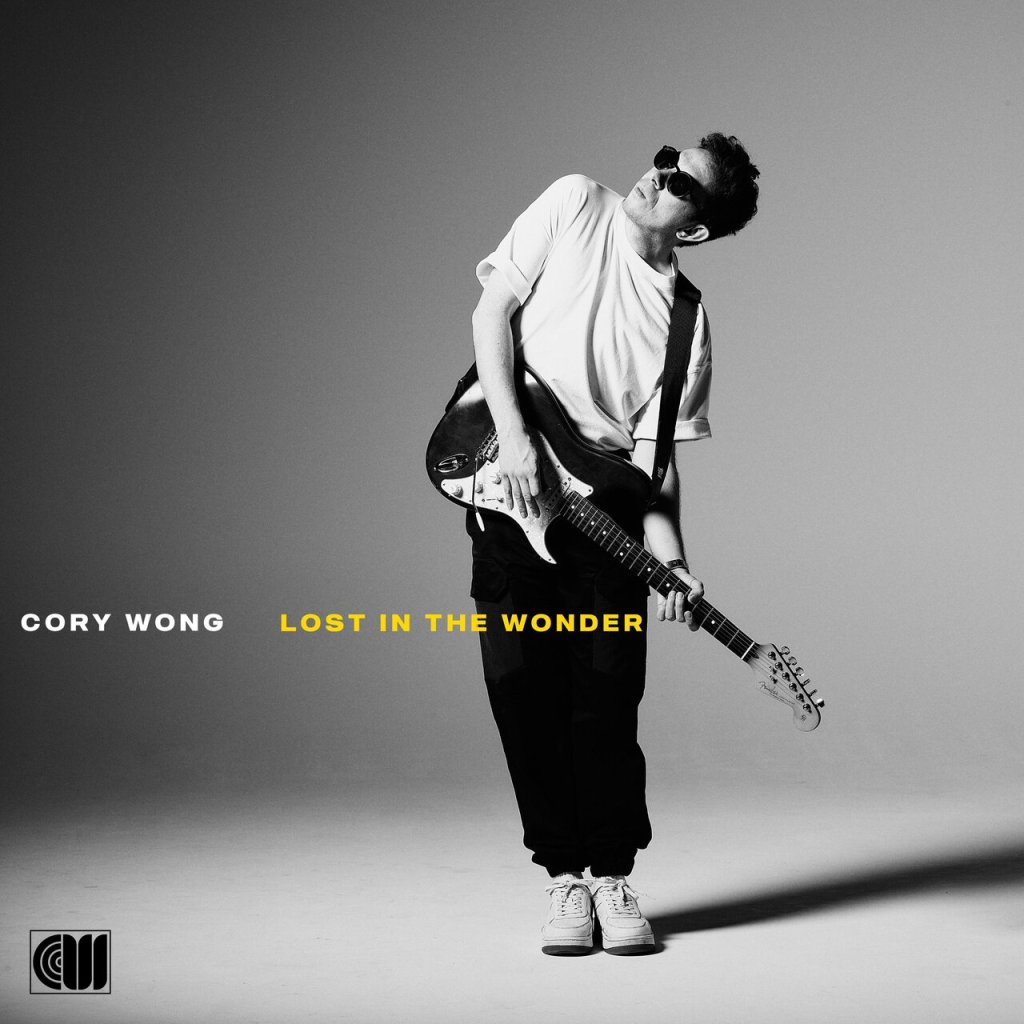
There is a moment on ‘Tongue Tied,’ about thirty seconds in, where a keyboard riff floats up that will make any self-respecting music fan think of Daft Punk’s ‘Digital Love.’ It is a bold, shimmering nod to the past, and it tells you everything you need to know about where Cory Wong is headed with Lost in the Wonder. The GRAMMY-nominated Minneapolis guitarist, best known for his razor-sharp rhythm work with Vulfpeck and The Fearless Flyers, has taken a decisive step away from the instrumental funk workouts that built his reputation. In their place: a full-blown pop record, twelve tracks of slick, collaborative songcraft that positions Wong less as a guitar hero and more as a modern-day Quincy Jones – the architect behind the glass, building shimmering sonic worlds for a rotating cast of vocalists to inhabit.
‘There are lots of sides to me as an artist,’ Wong has said about the record. ‘A lot of people know me as a guitar guy. That’s accurate, but it doesn’t tell the whole story.’ He is right, and Lost in the Wonder makes his case persuasively. The album opens with ‘Stay With Me,’ featuring Stephen Day on vocals, and it immediately establishes the record’s aesthetic: punchy brass arrangements that recall city pop at its most exuberant, a tight rhythm section that never overplays, and Wong’s guitar sitting comfortably in the mix rather than dominating it. A slick saxophone solo closes the track, and you realise this is going to be a different kind of Cory Wong album.
The production throughout is immaculate. Wong executive-produced and mixed the entire record alongside engineer John Fields, and the sonic palette is consistently warm, polished, and radio-ready. ‘Better Than This,’ featuring Cody Fry, kicks off with a thumping bass line that flirts with house music territory before Wong’s signature funk riff slices through the mix like a hot knife. ‘Blame It On The Moon,’ with Magic City Hippies, is pure jazzy disco – the brass section firing on all cylinders, the bass line practically begging you to move. These are the moments where the album hits its stride: Wong’s instinct for groove married to pop structures that give his playing a wider canvas.
The guest list reads like a who’s who of contemporary vocal talent, and the results are predictably uneven. The two Stephen Day collaborations are among the strongest material here – Day’s voice has an effortless warmth that complements Wong’s arrangements beautifully. Theo Katzman, Wong’s Vulfpeck bandmate, delivers the album’s emotional centrepiece with ‘Lisa Never Wanted To Be Famous,’ a masterful soul ballad that begins with just piano before the rhythm section gently enters. It is the most patient, most mature song Wong has ever produced, and it benefits enormously from Joe Dart’s understated bass work and Benjamin Jaffe’s delicate flute. The closing ‘From Now On,’ featuring Louis Cato with Nate Smith on drums and harmonica from Cy Leo, wraps the album in a gospel-tinged embrace that feels genuinely moving.
Where the record stumbles is in its first half, which races by almost too quickly. Several tracks clock in under three and a half minutes, and just as you settle into a groove – just as Wong starts to really cook on guitar – the song fades or cuts. ‘The Big Payoff,’ featuring ellis, is the exception: a five-and-a-half-minute slow burn that could soundtrack a midnight drive down the Miami coastline. But the ellis collaborations elsewhere feel less integrated, as though Wong simply grafted indie-pop vocal textures onto fully formed funk compositions without truly fusing the two sensibilities. ‘All Night, Alright,’ featuring Taylor Hanson, veers into cheese territory – a retro funk pastiche where the vocals strain for romantic urgency but land somewhere closer to karaoke.
Critics on Album of the Year have been quick to draw comparisons to Justin Timberlake’s ‘Can’t Stop the Feeling,’ and it is a fair observation. There are moments where the super-polished disco-pop sheen threatens to sand away the raw musicianship that makes Wong so compelling in a live setting. His legendary ‘Wong-chops’ – those percussive, syncopated rhythm guitar bursts – are present but often tucked into the mix, serving the song rather than stealing the spotlight. For longtime fans who came for the virtuosity, this may feel like a concession. For the broader audience Wong is clearly courting, it is exactly the right move.
The album’s second half is where Lost in the Wonder truly finds itself. The longer tracks breathe, the collaborations deepen, and Wong’s guitar playing becomes more expressive and daring. ‘Roses Fade,’ with Devon Gilfillian, is a soulful five-minute journey that showcases Wong’s arranging chops at their finest – trumpet, flugelhorn, and guitar weaving together in a tapestry that Stevie Wonder would approve of. The title track, featuring Dutch artist Benny Sings, is crisp and dreamy, a mid-tempo meditation that justifies the album’s name.
Lost in the Wonder is not the record that will satisfy every corner of Wong’s fanbase, and it does not need to be. It is the sound of a musician who has spent years proving he can play anything, now proving he can build anything. At 40 years old, Wong is making a play for pop craftsmanship on a grand scale, and while the results are occasionally too polished for their own good, the ambition is undeniable. If you love what Nile Rodgers did for Diana Ross and David Bowie, or what Pharrell brought to the Neptunes era, you will find much to admire here. Wong may have traded his guitar-hero cape for a producer’s chair, but the groove – as always – remains irresistible.
________________________________________
RATING: 7/10
Label: Roundwound Media, LLC.
Key Tracks: ‘Lisa Never Wanted To Be Famous,’ ‘Stay With Me,’ ‘Roses Fade,’ ‘Blame It On The Moon’
For Fans Of: Vulfpeck, Nile Rodgers, Scary Pockets, Tom Misch, Snarky Puppy
 Writerz Block
Plaats een reactie