Albumreview by: Jan Vranken
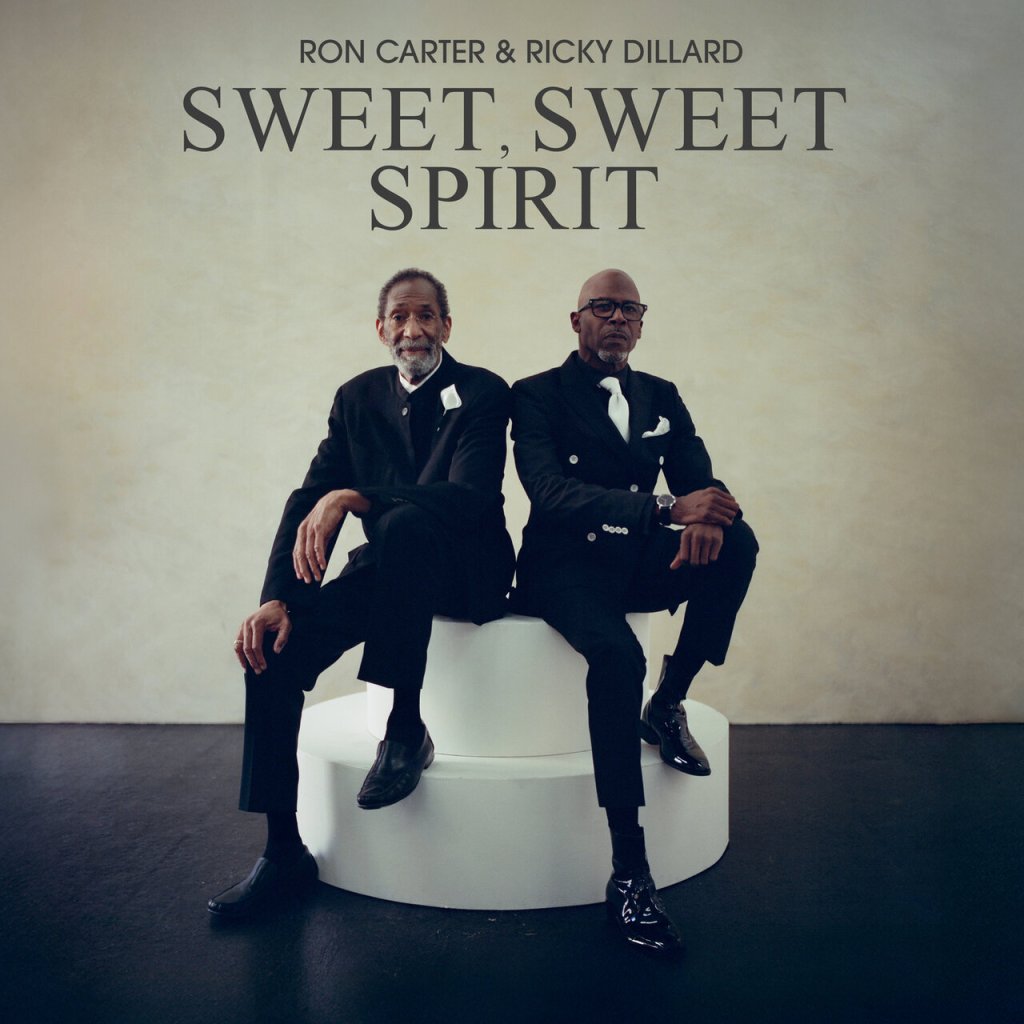
A Jazz Legend and a Gospel Icon Bridge Two Sacred Traditions on a Quietly Radical Album
There is a moment, somewhere in the opening bars of ‘Open My Eyes,’ where Ron Carter’s double bass enters with such deliberate tenderness that it feels less like a musical statement and more like a prayer whispered into the wood of the instrument itself. And then Dr. Ricky Dillard’s New-G Choir rises behind it — not crashing in, but ascending, the way incense lifts in a Sunday morning sanctuary. Right there, in those first seconds, you understand what Sweet, Sweet Spirit is: not a genre experiment, not a marketing gimmick, but an act of devotion three decades in the making.
The backstory alone could fill a documentary. When Mrs. Willie O. Carter, Ron’s mother, was spending her final days in a care facility, she asked her son — the man who’d played on over 2,200 albums, who’d anchored Miles Davis’s Second Great Quintet, who holds a Guinness World Record — to sing the hymns of his Detroit childhood. Carter went home, composed bass arrangements around ten of her most beloved hymns, and recorded them for her remaining weeks. Those private recordings became the seed for this album. Nearly thirty years later, Carter finally found the right collaborator to bring his mother’s songs to the world.
That collaborator could only have been Ricky Dillard. The Chicago-born choirmaster has spent over 35 years reshaping gospel choir music, from his Grammy-nominated debut The Promise in 1990 through his fiery Choirmaster series for Motown Gospel. His New-G Choir brings a combustible energy to everything they touch. If you ever wondered what Aretha Franklin’s legendary Amazing Grace sessions might sound like filtered through a Blue Note sensibility, with the world’s greatest living bassist holding the reins, Sweet, Sweet Spirit is your answer.
The ten tracks are all traditional hymns — ‘Pass Me Not,’ ‘Farther Along,’ ‘Just A Closer Walk With Thee,’ ‘In The Garden,’ ‘Softly and Tenderly’ — songs most listeners will recognize from the first phrase. That familiarity makes Carter and Dillard’s achievement all the more striking. They never deconstruct these hymns or ironize them. They recontextualize them, placing Carter’s sophisticated harmonic language alongside Dillard’s dynamic choir arrangements in a way that feels simultaneously ancient and startlingly new.
Carter’s bass serves as narrator throughout, guiding each piece with the melodic authority he brought to Wayne Shorter’s Speak No Evil or Herbie Hancock’s Maiden Voyage. His tone is warm and woody, never showing off, always serving the song. At 88, Carter plays with the kind of economy that only a lifetime of music can teach. Every note lands with purpose.
Dillard, for his part, conducts his choir with characteristic precision and fire. The New-G ensemble functions less as a backing vocal group and more as a full-bodied instrument — sometimes a massed organ, sometimes a delicate string section, occasionally an unstoppable force of pure exaltation. On ‘Everybody Will Be Happy,’ they build from a gentle murmur to a roof-raising crescendo that would convert the most committed atheist in any jazz club in America. ‘Just A Little Talk With Jesus’ showcases Dillard’s gift for dynamic control — the way he can pull thirty voices down to a whisper, let Carter’s bass breathe in the silence, then bring the choir roaring back with the intensity of a tent revival.
If there is a criticism, it is a gentle one. The album’s sustained mood of spiritual uplift means there are few sharp turns or surprises. Listeners hoping for the harmonic adventurism Carter brought to his more experimental outings may find the arrangements relatively straightforward. But this misses the point. Sweet, Sweet Spirit was never meant to be a virtuosity showcase. It is a son’s love letter to his mother, and its restraint is its strength.
The title track stands as the album’s centerpiece, a luminous reimagining of Doris Akers’ classic that has been a staple in churches since 1962. Carter’s bass creates a walking foundation that nods subtly to jazz tradition while Dillard’s choir delivers the melody with a warmth and conviction that makes the hair stand on the back of your neck. It is, quite simply, one of the most beautiful recordings either artist has ever been a part of.
Sweet, Sweet Spirit marks a genuine first: the inaugural joint release for both Blue Note Records and Motown Gospel. That alone signals its cultural significance. But beyond the historic handshake between genres lies something far more universal — a reminder that jazz and gospel have always been siblings, born from the same well of African American expression, and that sometimes it takes a mother’s love to bring them together again.
When this music plays, one can truly envision Willie O. Carter smiling from above — in joy, and in faith.
(8/10) (Motown Gospel / Blue Note Records)
 Writerz Block
Plaats een reactie