A Love Letter Written in the Fading Light — and It’s Luminous
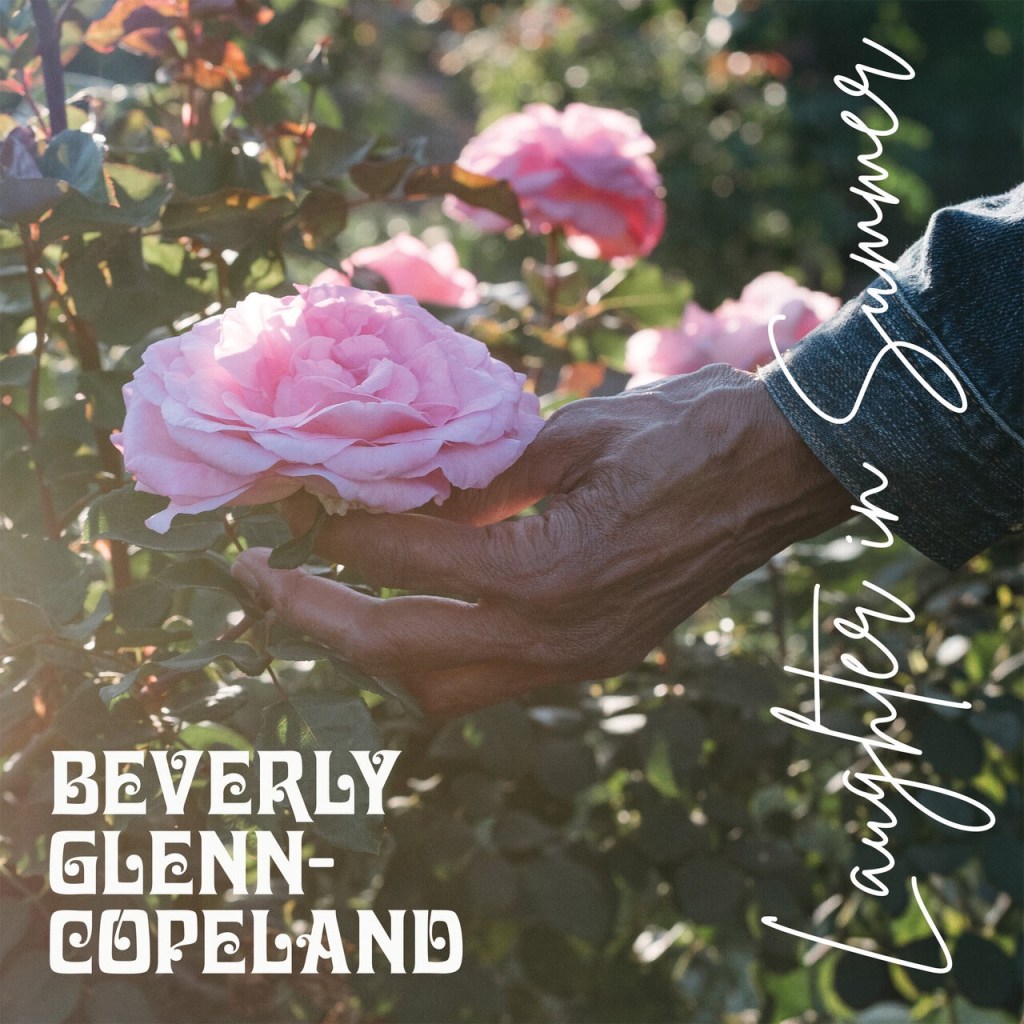
Beverly Glenn-Copeland | Laughter in Summer | Transgressive Records | Release: February 6, 2026
Albumreview by :Jan Vranken
There comes a moment in every great artist’s career where the line between music and life dissolves entirely. For Johnny Cash, it was the American Recordings sessions — an aging man staring down mortality with nothing but his voice and a guitar. For Beverly Glenn-Copeland, that moment is Laughter in Summer, an album so achingly intimate, so stubbornly alive, that it feels less like a collection of songs and more like a hand reaching out from the stereo, asking you to hold on.
Glenn-Copeland has lived many lives. Born in Philadelphia in 1944, he became one of the first Black students to attend Montreal’s McGill University, released a string of brilliantly idiosyncratic albums in the 1970s blending classical, jazz, and spiritual music, wrote for Sesame Street, and appeared on Canadian children’s television. Then came Keyboard Fantasies in 1986 — a visionary electronic album recorded on a Yamaha DX7 and a Roland drum machine, pressed as a tiny cassette run, and promptly forgotten. Nearly three decades later, a Japanese record collector named Ryota Masuka unearthed it, and the world finally caught up. Suddenly, Glenn-Copeland was playing festivals, receiving standing ovations, and watching a new generation fall in love with music he had made in near-total obscurity.
Then, in 2024, came the diagnosis: LATE, a form of dementia. For most people, that would be the closing chapter. For Glenn-Copeland and his wife Elizabeth — eco-poet, theatre producer, lifelong collaborator — it became the opening bars of something new.
Laughter in Summer was never supposed to be an album. In 2024, before a Montreal performance, the couple was invited to spend time at Hotel2Tango, the legendary studio co-owned by Howard Bilerman of Godspeed You! Black Emperor fame. There was no grand plan. They simply wanted to capture the songs they had been performing on tour, joined by a choir of Montreal voices assembled by musical director Alex Samaras. None of the singers had rehearsed with Glenn and Elizabeth beforehand. Every song was captured in Glenn’s preferred style: one take only. The result is an album of startling purity — raw, unvarnished, and radiating a warmth that no amount of studio polish could replicate.
The record is bookended by two movements of ‘Let Us Dance,’ and these frame the emotional architecture of the entire project. Movement One opens with Glenn’s voice — still remarkably strong, that unmistakable vibrato cutting through like sunlight through stained glass — delivering a solitary verse of quiet persistence. Movement Two, which closes the album, is looser, more communal, almost joyously ragged. It was actually recorded during a rehearsal that Glenn immediately declared finished. That spontaneity is the album’s secret weapon: nothing here sounds performed. Everything sounds lived.
The title track arrived almost by accident. Glenn had been composing a series of instrumentals he called ‘Songs With No Words,’ meant for listeners to add their own lyrics. One day, sitting by a lake with Elizabeth, he played one such piece. Listening to loons overhead and gazing at the sky, words rose up in her: ‘laughter in summer, how I remember.’ It became a duet between the two of them — Elizabeth singing lead with a kind of devastating tenderness, Glenn and the choir providing wordless accompaniment. The song captures something that few albums even attempt: the specific, irreplaceable texture of a love that knows its time is finite.
‘Harbour,’ originally from 2023’s The Ones Ahead, is reimagined here as a devastating exchange. First Glenn sings the complete lyrics, then Elizabeth, and finally they join together on the chorus. The repetition, far from feeling redundant, becomes a kind of vow renewal — two voices saying the same words from different sides of a shared life. ‘Children’s Anthem,’ originally written for a teacher’s workshop on bullying, sounds like a modern secular hymn, its plea to ‘let them play and let them learn’ carrying a weight that extends far beyond the classroom.
The unaccompanied rendition of ‘Shenandoah’ is perhaps the album’s most audacious moment — no piano, no choir, just voices and an immense silence around them. It is an old song about yearning and departure, and in Glenn-Copeland’s hands it becomes something almost unbearably profound. Meanwhile, ‘Middle Island Lament,’ enriched by Naomi McCarroll-Butler’s evocative whistle playing, reaches back into histories of famine, quarantine, and farewell — echoing the couple’s years running a theatre school on Canada’s Acadian coast.
If there is a criticism to be made, it is that the album’s deliberate simplicity — the hymn-like structures, the economical lyrics, the spare piano accompaniment — may feel too understated for listeners expecting the electronic textures of Keyboard Fantasies. This is a different Glenn-Copeland altogether: stripped back, vocally centered, almost liturgical. But that restraint is precisely the point. As his executive functioning diminishes, his musical being — ‘and I would say his heart self,’ Elizabeth has noted — only grows stronger.
What makes Laughter in Summer extraordinary is not its context, though the context is extraordinary. It is the complete absence of self-pity, the refusal to treat mortality as tragedy rather than as simply another part of the dance. Fifty years of Buddhist practice have given Glenn-Copeland a perspective that feels genuinely radical in an age of anxiety and noise: that from the moment we are born, we begin the long walk home — and that this is not only acceptable but beautiful. If you think of how Neil Young’s Harvest Moon revisited themes of love and loss with the grace of age, Laughter in Summer operates in a similarly transcendent register, though in a language entirely its own.
This may be Beverly Glenn-Copeland’s final album. If it is, it stands as one of the most generous, most unguarded, and most profoundly humane records you are likely to hear. Not because it is sad — though it will make you cry — but because it insists, with every single note, that love is worth singing about until the very last breath.
Key tracks: ‘Laughter in Summer,’ ‘Let Us Dance (Movement Two),’ ‘Harbour,’ ‘Shenandoah’
(9.0/10) (Transgressive Records)
 Writerz Block
Plaats een reactie