On learned shame, performative liberation, and four words that say everything
Written by: Jan Vranken

I am sixty. I have a body. I have made my peace with it.
Apparently, that makes me a radical.
It took thirty years to get here. Not thirty years of therapy or self-help books or body image workshops. Thirty years of living, watching, thinking. Until one morning I woke up and understood there was nothing to accept. I have a body, the way every other eight billion people on this planet have a body. I am not special. Neither are you. Neither is anyone.
And that — precisely that — is the whole answer.
Just be ordinary. It sounds simple. It is revolutionary.
Last week I was at the office. A much younger female colleague was loudly canvassing opinions on wellness centres nearby. She wanted a relaxing afternoon, which is entirely her business. There was, however, a condition: it had to be a swimwear-mandatory facility. Because she would never — absolutely never in her life — go naked in public. And she had no desire whatsoever to be confronted with — and I am quoting directly — ugly fat old men.
Four words.
Let me unpack them, because an entire worldview is compressed in there. Ugly — because bodies are ranked on a scale from beautiful to repulsive, and that ranking gives you the right to look away. Fat — because size is apparently a moral category, not a biological reality. Old — because ageing is something to be shielded from, not something that happens to every single human being, including her, inevitably, on a day that is already closer than she thinks. Men — because the naked male body in a mixed space is by definition an assault on the senses.
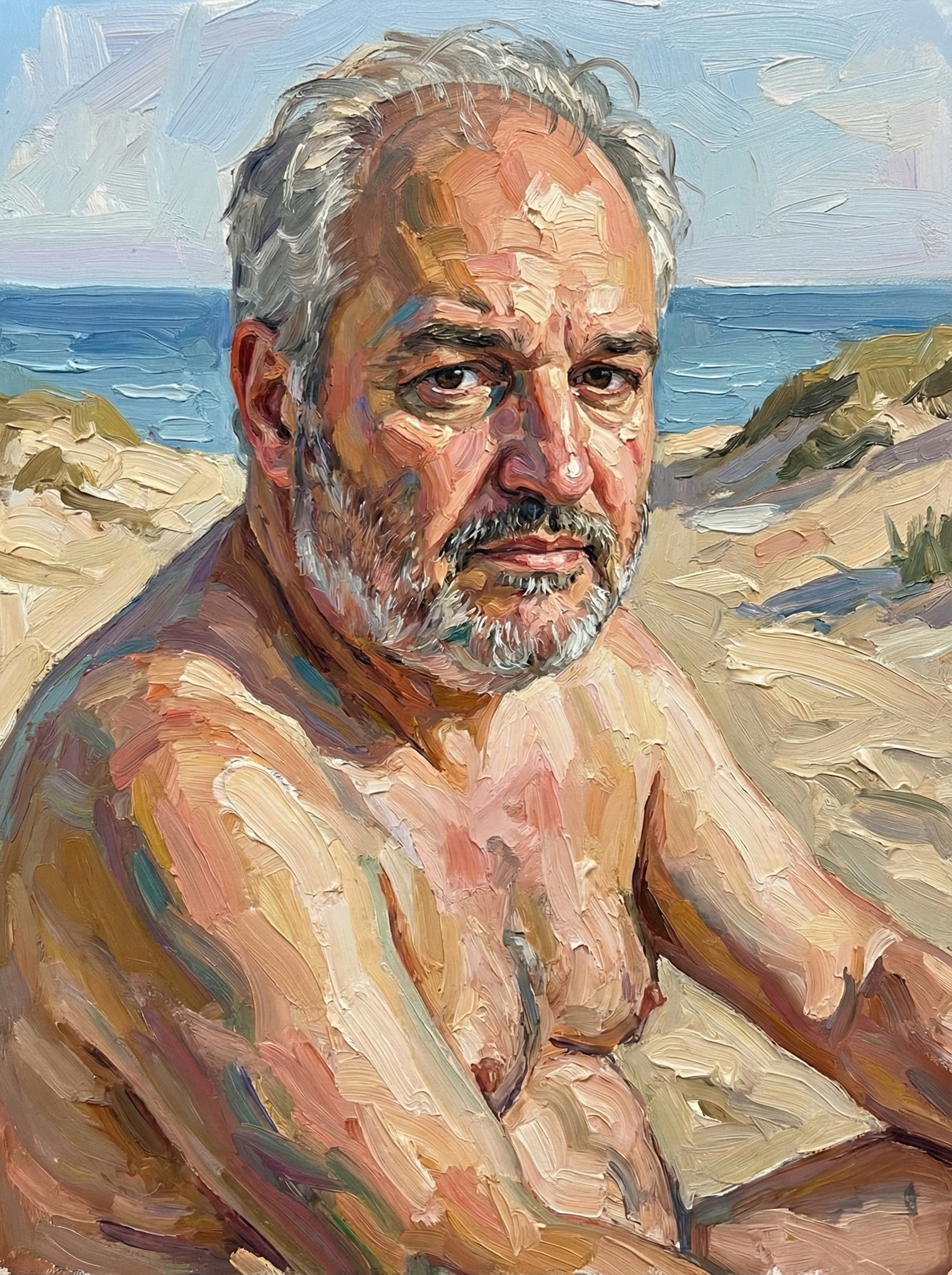
Four words. Four verdicts. One sentence that told me more about the state of this society than a year’s worth of newspapers.
But it didn’t stop there.
A second colleague joined the conversation. Also a woman. She was going to the wellness centre too. But she was going naked, because swimwear is unhygienic, and besides, we are all equal, and she knows perfectly well what her friends look like. She had learned to embrace her body. She was, actually — and she said this with the casual ease of someone who has practised the line — quite attractive, really. And those ugly fat old men? Well. You don’t have to look at them.
Knowing nods all round. Shared contempt. The same four words, a different mouth.
I briefly considered climbing out of the window.
What I witnessed in that office was not two opposing views on the human body. It was two sides of exactly the same coin. Colleague one fled into shame and swung that shame around like a weapon. Colleague two had worked her way up to a state of demonstrative liberation and wore it as a status symbol — so convincingly that she no longer noticed how judgmental she sounded.
But on the ugly fat old men, they were in complete agreement.
In this country, nudity is never just nudity. It is either a crime or a manifesto. The idea that a human body might simply be present — without requiring a verdict, an explanation, or a hashtag — has been lost somewhere along the way. And nobody seems to miss it.
Bodily shame is not innate. Children are not born with it. It is taught, instilled, whispered in. By parents who hide behind closed doors when they undress. By school curricula that reduce the human body to reproduction and danger. By advertising that glorifies one type of body and erases everything else — then sells those same bodies back to us as aspiration. By social media platforms that censor a nipple but leave violence untouched. Shame is a cultural product, carefully assembled across generations, and it has been internalised so thoroughly that people no longer recognise it as a construct. It feels like truth.
The reaction to that shame — performative body positivity, parading liberation, the activist who posts her bikini photo with the hashtag allbodiesarebeautiful while quietly manoeuvring away from anyone in the sauna who doesn’t meet her aesthetic standards — is not the solution. It is shame in a mirror. Equally judgmental. Equally anxious. Just better packaged, and rewarded with algorithmic approval.
Real acceptance looks different. It is quiet. It needs no hashtag. It does not ask for admiration and offers no apology. It is what remains when both the shame and the performance have finally stopped.
Thirty years ago I would not have left that office quietly. I would have argued. I have done it dozens of times — explaining, reasoning, dismantling myths, trying to convince. I was already happier naked than clothed at twenty. And I always lost. Not because my arguments were weak, but because the outcome was always the same: the look. The one that marks you as suspect. The dirty man. The exhibitionist hiding behind a philosophy.
Those thirty years were not a journey from shame to acceptance. They were a journey away from the need for other people’s mirrors. An understanding that my self-worth requires no one else’s validation. No admiration. No comprehension. No permission.
I have a body, like every other human being on earth. I am not exceptional. No one is. And because no one is exceptional, everyone is ordinary. That is not resignation. That is freedom.
I am sixty. I have a body. I have made my peace with it.
I am not here to convince you.
But perhaps, after reading this, you might ask yourself why you find it such a big deal.
Jan Vranken writes about music, society and everything in between at Writerz Block.
 Writerz Block
Plaats een reactie