By:Jan Vranken
Jumping into cold water feels terrible for about four seconds — and then something interesting happens.
Cold water immersion triggers a cascade of physiological responses that have been used for centuries in cultures from Scandinavia to Japan. Today, the science is catching up to the tradition, and the findings are genuinely compelling.
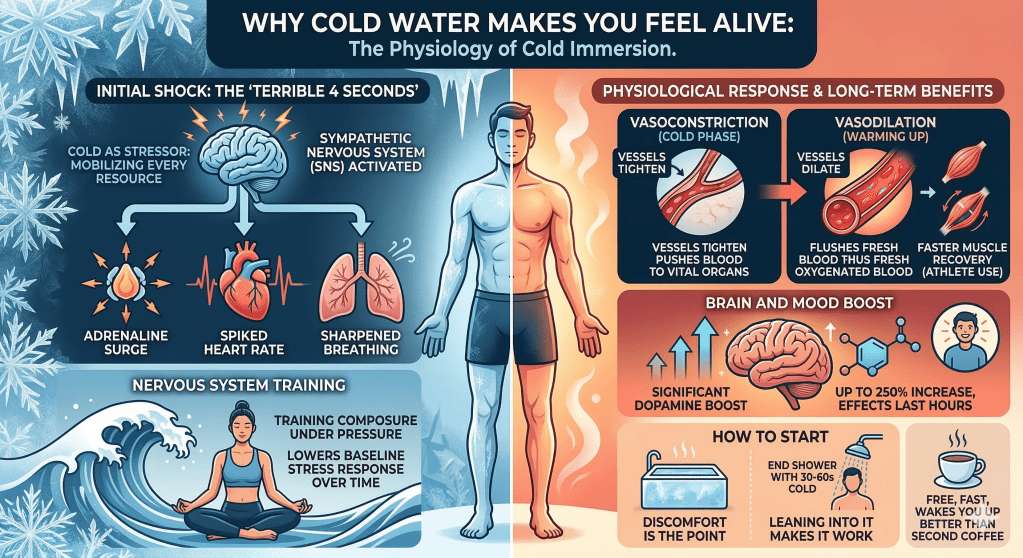
When your body hits cold water, your sympathetic nervous system fires immediately. Adrenaline surges. Your heart rate spikes. Your breathing sharpens. In other words, your body treats it as a stressor — and responds by mobilizing every resource it has. But here’s the interesting part: when you stay calm through that initial shock, you’re essentially training your nervous system to stay composed under pressure. Cold exposure, practiced regularly, lowers your baseline stress response over time.
On the physiological side, cold water causes vasoconstriction — blood vessels tighten, pushing blood toward your vital organs. When you warm up afterward, the vessels dilate again, flushing the body with freshly oxygenated blood. Many athletes use this for faster muscle recovery. Research also points to a significant boost in dopamine — one study found cold exposure increased dopamine levels by up to 250%, with effects lasting several hours.
You don’t need an ice bath to get started. Even ending your shower with 30 to 60 seconds of cold water produces measurable effects. The discomfort is the point — leaning into it is what makes it work.
It’s free, it’s fast, and it wakes you up better than a second coffee.
 Writerz Block
Plaats een reactie